AI code review for small teams — integrate it without creating chaos
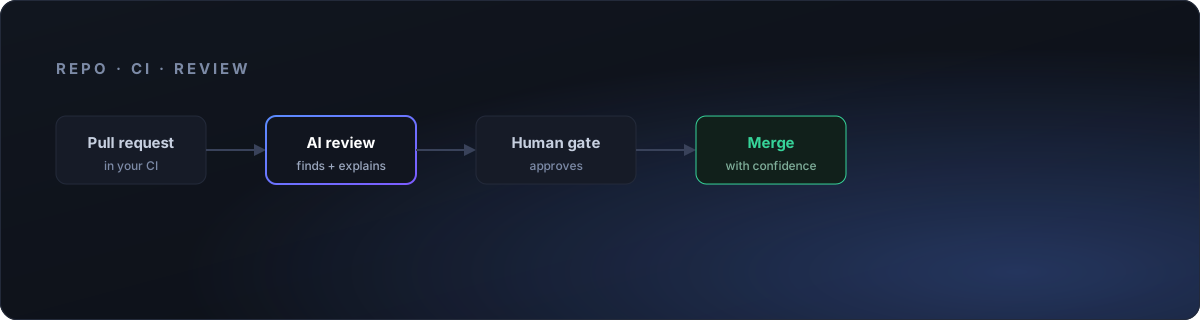
Small and mid-size engineering teams are in an awkward spot with AI QA. The tools exist and they're good. The big outsourcers (QASource, Qualitest) only serve enterprises. And you don't have a dedicated platform team to wire everything up safely — we act as that platform team. So the tooling either sits unused or gets bolted on in a way that creates — to borrow a phrase — faster, more scalable chaos, which is why most tools get muted within weeks.
Here's how to adopt AI code review on a 10–50 dev team without that outcome.
Start with the bottleneck, not the tool
Don't begin by picking a tool — once you know the bottleneck, use a selection framework to choose. Begin by finding where defects actually slip through and where reviewers actually drown. For most growing teams it's the same place: pull request review. AI is writing more of the code (Copilot, Cursor), review volume has exploded, and senior engineers are the constraint.
If that's your bottleneck, AI-assisted review is the highest-leverage place to start. If your bottleneck is flaky tests or missing coverage, start there instead.
What to actually wire up
A working setup on a small team has four parts, and only one of them is "the tool":
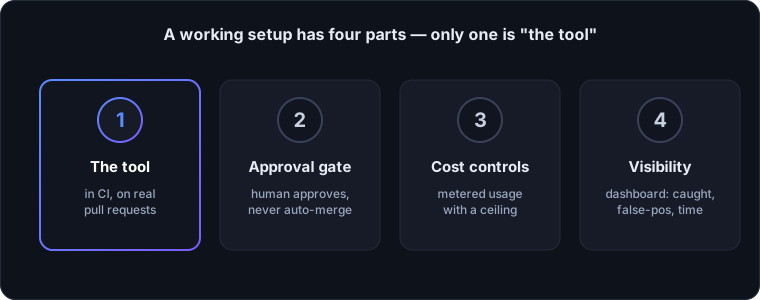
- The tool, running in your CI/GitHub on real pull requests (here's how to wire it into GitHub Actions) — not a separate dashboard nobody opens.
- A human-approval gate. The reviewer comments; a person approves and merges. Never auto-merge early. This is what makes it safe to trust.
- Cost controls. Metered AI usage with a ceiling, so a huge PR or a runaway loop doesn't surprise you.
- Visibility. A simple dashboard so you can see it working — findings caught, false-positive rate, review time.
That fourth part is what separates a real adoption from a hobby script, and it's usually the part teams skip.
Keep it assistive
The fastest way to lose your team's trust — and to create real liability — is to let AI merge or modify code on day one. Start read-and-comment only. Earn broader scope over time, if ever. Your reviewers stay in control; the AI removes their fatigue and catches what they miss.
Run it on your own PRs before you commit
The only honest way to know whether a setup works for your codebase is to run it on your recent pull requests and look at the findings. A one-to-two week pilot on real history tells you more than any vendor demo: does it catch the regressions you actually shipped, and does it stay quiet on the changes that were fine?
That's the whole game for a small team: pick the right tool, wire it in safely with guardrails, and prove it on your own code before you scale it.